Iquiry Now
Leave Your Message

How to Choose the Right Synthetic Grass Supplier?

Choosing the right Synthetic Grass supplier takes more than comparing prices or viewing a bright showroom sample. Product quality, installation support, and clear documentation can shape how a lawn or sports surface performs over time. The details matter.

Grand View Research’s Artificial Turf Market Size, Share & Trends Analysis Report estimated the global market at about USD 4.2 billion in 2023 and projected growth through 2030. A larger market gives buyers more options, but it also makes supplier claims harder to compare. Growth alone does not prove that a product is durable, suitable, or responsibly made. For sports projects, FIFA’s Quality Programme offers a useful reference: its testing framework assesses playing surfaces against defined performance requirements. Buyers should check whether a supplier’s test documents apply to the specific product being quoted.

Ask for evidence. Request product specifications, warranty terms, and test reports that identify the tested product and testing method. Compare details such as pile height, yarn material, backing, drainage performance, and stated use. For a garden, drainage and heat underfoot may matter more than a sports rating. For a field, consistent performance and installation guidance deserve closer attention. A sample can look convincing under showroom lights, yet reveal little about its drainage or long-term wear. No checklist removes every uncertainty; suppliers may present information differently, and some claims need follow-up. A careful conversation, supported by verifiable records, is a better starting point than a low quote alone.
How to Choose the Right Synthetic Grass Supplier?

Define Your Project Requirements and Synthetic Grass Specifications

Choosing the right synthetic grass supplier starts before you request a quotation. Define how the area will be used, measured, and maintained. A family lawn needs different specifications from a sports training surface. Write down traffic levels, drainage conditions, sunlight exposure, pets, and installation access. Measure the full area, including edges and awkward corners. Small errors become costly waste. Very practical.

Then set measurable grass requirements. Compare pile height, yarn shape, stitch rate, face weight, backing, and total product weight. A taller pile may look luxurious, but it can flatten under frequent foot traffic. Dense, shorter fibers often suit busy paths better. Ask for samples in daylight and after brushing. Check color variation, recovery, softness, and shedding. For wet sites, request drainage-rate data and inspect the backing perforations. UV resistance, fire performance, and material safety documentation should be available where relevant. Do not accept vague phrases such as “premium quality.” Get the specification sheet in writing.

Supplier reliability is also tested through details. Ask how production batches are controlled and what the warranty actually covers. Confirm roll widths, delivery conditions, replacement procedures, and installation guidance. I once focused too heavily on appearance and overlooked seam visibility. That mistake changed my checklist. A sample can impress you. The installed surface may behave differently. Request a larger sample or a small trial area when possible. Record every agreed specification before payment, because memory is a poor contract.

Review Supplier Experience, Product Range, and Manufacturing Capabilities

Choosing a synthetic grass supplier takes more than comparing sample colors. Review the supplier’s experience with projects similar to yours, such as residential lawns, play areas, or sports surfaces. Ask for project references and clear product specifications. Useful details include pile height, face weight, backing type, drainage rate, and UV-stability testing. A sample may feel soft, yet still perform poorly under heavy foot traffic.

Check the product range and how it fits your site. A supplier should explain differences in yarn shape, density, and maintenance needs without relying on vague claims. Manufacturing capability matters, too. Ask how batches are inspected, whether production records are available, and how defects are handled. If possible, compare samples from different production runs. One sample is not the whole story.

Tips: Request a written specification sheet and a larger sample. Check the backing, stitch consistency, and drainage with a small water test. Ask who handles quality checks. A polished sample can still hide variation across a full roll, and I would not treat a low price as proof of poor quality either. Compare evidence, not assumptions.

Assess Grass Quality, Safety Standards, and Supporting Documentation

A dependable synthetic grass supplier should provide test results for the exact product and intended use, not just a general certificate. For sports surfaces, FIFA’s Quality Programme for Football Turf sets measurable performance criteria: its Quality Pro category specifies 60–70% shock absorption and 4–8 metres of ball roll. These figures are useful benchmarks, but they do not automatically apply to landscaping or playground grass. Ask for the test method, laboratory, test date, and product identification. Check that the sample’s pile height, backing, and infill match the quotation.

Safety needs equally specific evidence. Request material declarations and relevant independent test reports for substances such as lead, PAHs, and VOCs, where applicable to your market and installation. Ask whether testing covers the finished turf or only its raw materials. That difference matters. A certificate without a matching product code may offer little assurance. Paperwork can still mislead.

Tips: Request the technical data sheet, safety data sheet, warranty terms, and installation guidance together. Confirm who performed each test and whether the report is current. For a sports project, compare results with FIFA’s Football Turf Handbook; for other uses, ask the supplier to identify the applicable local requirements. Keep one small sample and compare it with the delivered rolls. It’s easy to overlook color or backing changes when reviewing documents alone.

Compare Pricing, Delivery Terms, Warranties, and Customer Support

Compare written, like-for-like quotes, not just the price per square metre. Include freight, unloading, seam tape, infill, and any site-specific preparation. Grand View Research estimated the global artificial turf market at about US$3.25 billion in 2022, with projected growth of 6.5% annually from 2023 to 2030. That market estimate is not a price guide; it does show why product specifications and quote scope can vary. Ask suppliers to identify pile height, backing, roll width, and included accessories. Small omissions matter.

Check delivery terms before paying a deposit. Request a dispatch window, transit estimate, and written procedure for shortages or damaged rolls. For warranties, compare years with exclusions: UV exposure, drainage, installation, and permitted use may affect coverage. Ask who handles claims and what evidence is required. For sports installations, FIFA Quality Programme testing considers factors such as ball behaviour and player-surface interaction; its requirements are useful context, not a substitute for checking your project’s needs. Support should be reachable after delivery, too. Ask for installation guidance and maintenance instructions in writing. A spreadsheet is imperfect. I would still leave room for judgment when a supplier’s terms are clear but their answers feel vague.

Request Samples and Evaluate Suppliers Against Your Selection Criteria

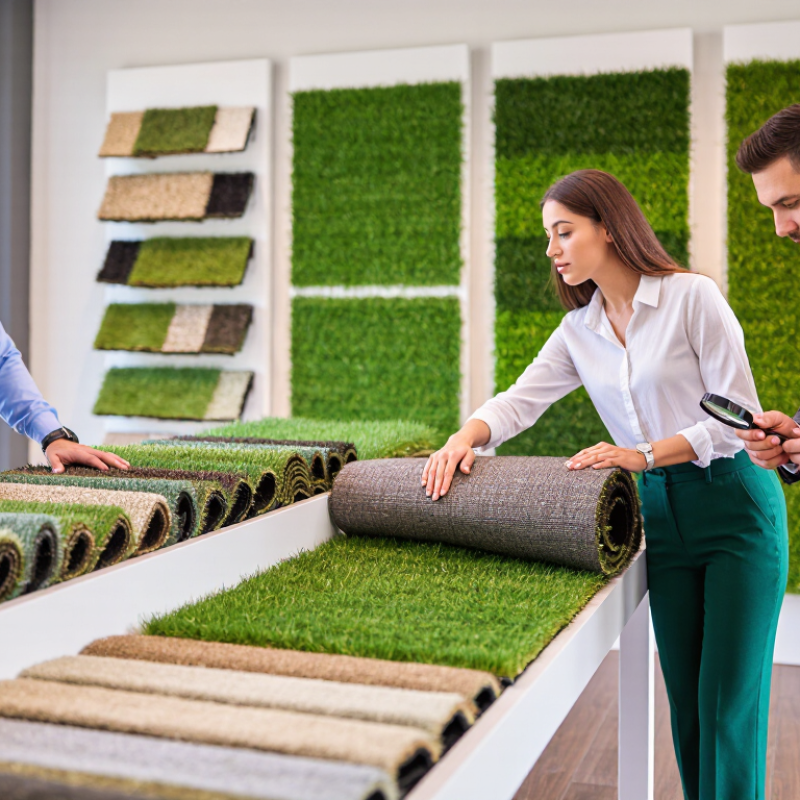
Request samples from each shortlisted synthetic grass supplier, not just a color card. Ask for a full-width piece showing the yarn, backing, and stitch pattern. Handle it outdoors. Check whether the fibers spring back after bending, whether the backing sheds, and whether the color shifts in sunlight. Keep one sample untouched for comparison. Small details matter.

Then test each sample against written criteria: intended use, pile height, face weight, drainage, UV resistance, and warranty terms. For sports surfaces, compare independent laboratory results, not sales claims alone. FIFA’s Football Turf Quality Programme sets shock absorption at 55–70% for FIFA Quality and 60–70% for FIFA Quality Pro. These ranges show why a test result needs context: the required performance depends on the application and specification. Ask suppliers to identify the test method, laboratory, product construction, and report date. A report for a different backing or infill may not describe the sample in your hand.

Use a simple scorecard and record what each supplier cannot document. Request batch identification and confirmation that production materials match the tested sample. It is easy to overvalue a neat sample; it cannot reveal installation quality or long-term wear. That uncertainty deserves a question, not a guess. Compare answers in writing before choosing.