 +86 19005411400+86 15006803065
Leave Your Message
-
Contact WhatsApp
-
 Contact Phone
 -
 Contact Email
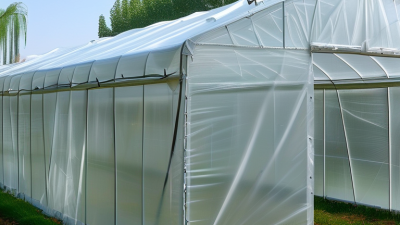
Choosing the best Clear Pvc Tarpaulin in 2026 starts with understanding where and how it will be used. A greenhouse cover needs dependable light transmission, while a patio screen may benefit more from stronger UV resistance and reinforced edges. For vehicle covers or outdoor partitions, thickness alone does not tell the whole story. The quality of the PVC coating, base fabric, welded seams, and eyelets can affect durability just as much. Small details matter.
This guide compares clear PVC tarpaulins by transparency, weight, reinforcement, weather performance, and ease of handling. It also explains what product specifications can—and cannot—tell you. A thicker sheet may feel sturdier, but it can be heavier and less flexible in cold conditions. A very clear sheet may brighten a space, yet show scratches more readily. There is no single best option for every job. That is worth remembering.
Where possible, compare manufacturer data with the conditions the sheet will actually face: direct sun, wind, frequent folding, or regular cleaning. Check stated thickness and fabric weight separately, and look for clear information about UV treatment and seam construction. If those details are missing, ask the supplier before buying. Marketing terms can sound reassuring, but they are not performance tests. The recommendations ahead focus on practical trade-offs, so you can choose a cover suited to your space, climate, and budget—not just the boldest product claim.
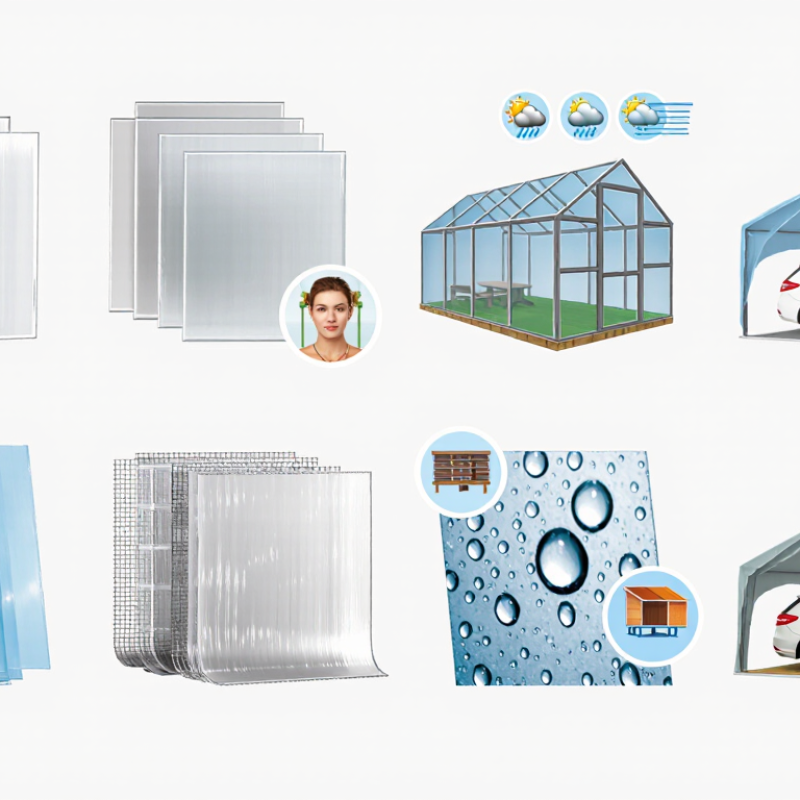
What Is the Best Type of Clear PVC Tarpaulin in 2026?
Clear PVC Tarpaulin: Composition, Structure, and Key Properties
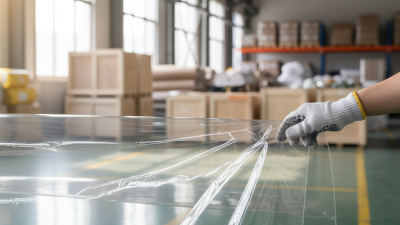
Clear PVC tarpaulin typically combines transparent polyvinyl chloride with a woven polyester scrim. The PVC layers provide weather resistance and visibility; the scrim helps the sheet resist pulling and tearing. Plasticizers support flexibility, while stabilizers and UV additives can slow sun-related damage. Exact formulations vary. A clear sheet may look similar to another but perform differently in cold weather or under constant tension.
For a useful comparison, check the fabric weight, reinforcement density, light transmission, and stated temperature range. ASTM D751 provides test methods for coated fabrics, including tests for strength and coating adhesion. Grand View Research estimated the broader global coated-fabrics market at USD 23.08 billion in 2023, with projected growth from 2024 to 2030; this figure covers many coated-fabric uses, not clear tarpaulins alone. Treat market growth as context, not proof of product quality. One detail is easy to overlook: thicker PVC can improve toughness but may reduce flexibility and clarity.
Tips: Ask for test results, not just a “heavy-duty” label. Inspect a cut edge for an even scrim and coating. For cold sites, request low-temperature flexibility data. I would not assume the clearest sheet is the strongest. Check welded seams too; weak joins can fail before the fabric does.
| Type | Composition and Structure | Optical Clarity | Strength and Flexibility | Weather and Care Considerations | Best-Suited Uses | Main Trade-Off |
|---|---|---|---|---|---|---|
| Unreinforced clear PVC film | A continuous transparent PVC sheet with no fabric scrim or textile reinforcement. | Usually the clearest option because there is no reinforcing grid within the sheet. | Flexible and easy to handle, but more vulnerable to punctures and tearing than reinforced constructions. | Can be affected by prolonged sunlight, temperature extremes, and contact with unsuitable cleaners. Check whether UV protection is specified. | Light-duty covers, simple weather screens, and applications where visibility is the priority and mechanical loads are modest. | High visibility comes with lower resistance to tearing and concentrated loads. |
| Clear PVC-coated polyester scrim | A woven polyester reinforcement scrim coated or encapsulated with transparent PVC. The scrim supports the PVC layer. | Good visibility, though the reinforcing threads may be visible and can slightly interrupt the view. | Generally stronger and more tear-resistant than unreinforced film; remains flexible, with performance dependent on fabric weight and coating. | Welded seams are commonly used. Outdoor life depends on the PVC formulation, UV protection, workmanship, and exposure conditions. | Clear screens, enclosures, equipment covers, and tarpaulins that need a balance of visibility and durability. | The reinforcement improves strength but can make the sheet less optically clear than plain film. |
| Clear PVC film laminated to polyester fabric | A transparent PVC film bonded to a polyester textile layer; some products use additional layers or reinforcement. | Ranges from clear to moderately clear, depending on film thickness, fabric backing, and lamination quality. | The textile layer adds support, while the bonded construction helps the material hold its shape. | Bond quality and edge sealing matter. Repeated folding, heat, or prolonged exposure can affect some laminated constructions. | Protective panels, covers, and partitions where a fabric backing or added dimensional support is useful. | Construction varies widely, so appearance and service life should be checked against the product specification. |
| Clear PVC-coated polyester mesh | A polyester mesh coated with PVC, or a mesh-based construction designed to retain visibility while allowing airflow. | Visibility is reduced by the mesh openings and coating pattern; it is not equivalent to a clear solid sheet. | Air-permeable and supported by the textile structure; resistance to wind loads depends on mesh design and installation. | Openings allow airflow but also allow water and dust to pass through, so it is not a fully weatherproof barrier. | Ventilated screens, shade or wind-control panels, and applications where airflow is more important than rain exclusion. | Improved airflow means reduced privacy and limited protection from rain and fine debris. |
Specification note: “Clear PVC tarpaulin” covers several constructions, and there is no single standardized performance level for all products. Transparency, thickness, tear resistance, UV performance, and temperature suitability vary by formulation and manufacturing method. Confirm the technical data sheet for the intended use.