+86 19005411400+86 15006803065


Rooftop Artificial Grass is moving from decorative novelty to a practical surface for terraces, hotels, offices, and mixed-use developments. China has become a major manufacturing base for synthetic turf, offering broad product selection, export experience, and competitive production capacity. Yet global buyers should examine more than color and pile height.
Grand View Research valued the global artificial turf market at approximately USD 3.8 billion in 2023. Its report projects continued growth through 2030, supported by urban development and water-conscious landscaping. Mordor Intelligence also forecasts steady market expansion, although estimates differ because research firms use different product definitions. The message remains clear: demand is growing, but quality expectations are rising.
A reliable China supplier should provide measurable evidence. Buyers need UV-resistance data, drainage performance, backing construction, fire-test documentation, and batch consistency records. Rooftop projects also require careful attention to roof loading, wind exposure, waterproofing protection, and maintenance access. EN 15330-1, REACH requirements, ISO 9001 systems, and relevant local building codes may support technical evaluation. They do not replace project-specific verification.
The best suppliers explain limitations honestly. No product performs perfectly under every climate. A sample may look excellent indoors, then fade under intense sunlight. Poor drainage can leave water around seams after heavy rain. This guide evaluates China’s leading Rooftop Artificial Grass suppliers through manufacturing capability, testing transparency, customization, export service, and real project experience. It also asks a less comfortable question: is the lowest quotation truly the lowest lifecycle cost?
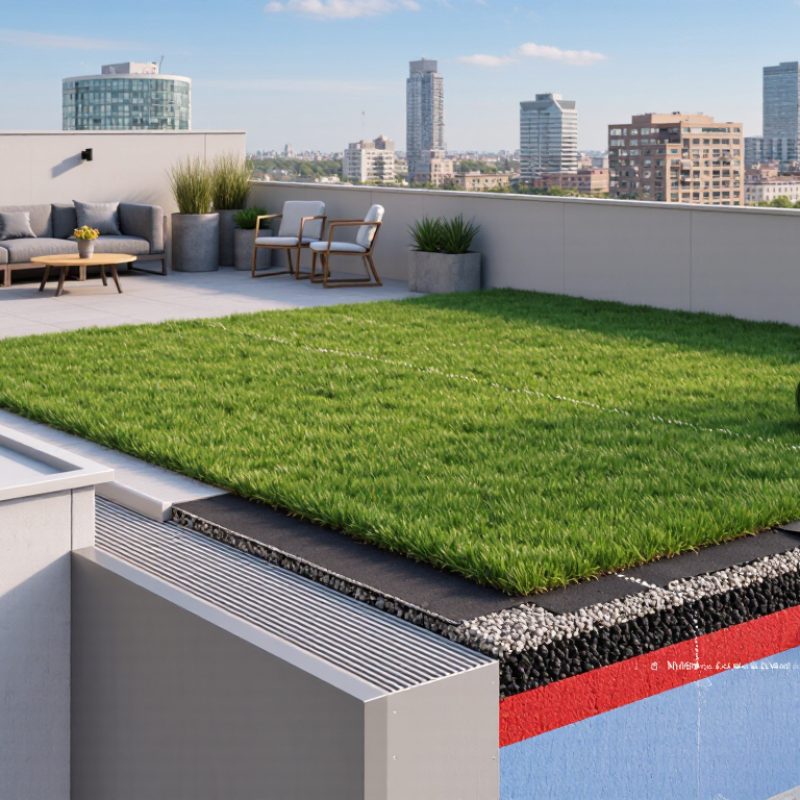
China's rooftop artificial grass supplier market has expanded from simple landscaping products into a technical sourcing field. Suppliers now serve apartments, hotels, offices, and private terraces. Their offers vary widely. Some focus on dense turf, while others produce lightweight systems for older roofs. In practical sourcing, I examine yarn resilience, backing permeability, drainage layers, and UV performance before discussing price. Factory experience matters. A supplier should explain production tolerances, batch testing, packing methods, and replacement procedures clearly. Photos alone are not enough. Buyers should request samples, technical sheets, and recent test records. Independent checks can expose differences in pile height, color stability, and water flow.
Rooftop projects in China also require careful coordination between turf suppliers and installation teams. A good product cannot correct poor slope design or blocked drains. Installers should confirm roof loading, wind exposure, edge fixing, and maintenance access before delivery. This detail is often missed. I would also compare fire-performance documentation with the destination market's requirements, because specifications are not automatically transferable. One uncomfortable lesson is that the cheapest quotation may hide thinner backing or weaker seam materials. That risk becomes visible after rain, heat, and repeated foot traffic. Reliable suppliers accept questions, record changes, and support small trial orders. Still, no catalogue replaces a site inspection.
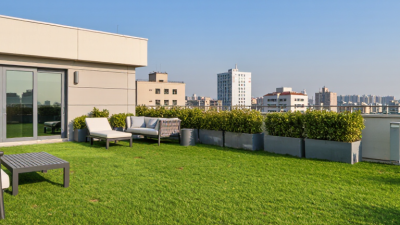
High-quality rooftop artificial grass begins with a stable, weather-ready structure. During rooftop installations I have reviewed, drainage was often more important than appearance. A perforated backing should let rainwater pass quickly. It must also resist pooling around seams and edges. UV-stabilized fibers help preserve color under strong sunlight. Heat-resistant materials reduce brittleness after repeated summer exposure. The pile should feel natural but remain firm under regular foot traffic. A dense, resilient surface usually performs better than an unusually tall one.
Reliable suppliers should provide clear technical data, including pile height, total weight, drainage rate, backing composition, and warranty terms. Rooftop systems also need careful attention to waterproofing, wind uplift, and structural load limits. A professional supplier should coordinate with installers and recommend suitable underlay materials. Fire performance requirements vary by location, so buyers must verify local building rules before ordering. No product is perfect. Some surfaces still become hot, and light colors may show dirt faster than expected.
Tips: Request a sample and test it outdoors for several weeks. Check drainage after heavy rain. Bend the backing by hand and inspect for cracking. Ask for independent test reports, not only sales claims. Confirm that the installation method will not damage the roof membrane. A cheaper option may look attractive, but replacement costs can become surprisingly high.
| Quality Dimension | Typical High-Quality Benchmark | Importance for Rooftop Applications | Recommended Verification |
|---|---|---|---|
| Yarn Material | UV-stabilized polyethylene (PE) yarn, with polypropylene (PP) used where additional thatch or support is required. | PE provides a soft, natural appearance and good resilience for terraces, balconies, hospitality areas, and rooftop gardens. | Request the technical data sheet, polymer specification, and sample for hand-feel, color, and recovery testing. |
| Pile Height | Approximately 20–40 mm for most rooftop landscaping and recreational areas. | Moderate pile height helps balance comfort, visual density, drainage performance, product weight, and wind exposure. | Measure pile height from the primary backing to the yarn tip on an unstretched sample. |
| Stitch Density | Common premium specifications are about 14,000–18,000 stitches per square metre, depending on gauge and pile height. | Higher density generally improves coverage, appearance, wear resistance, and dimensional stability, although it can increase weight and cost. | Confirm stitches per square metre, gauge, row spacing, and total product weight on the specification sheet. |
| Primary Backing | Stable woven backing designed to resist stretching and maintain stitch integrity during installation. | A strong backing helps the grass remain flat and reduces the risk of rippling or seam movement on exposed roof surfaces. | Check backing construction, tensile-strength data, dimensional-stability results, and sample behavior after temperature cycling. |
| Drainage Performance | Perforated backing with a declared drainage rate; many landscaping products target approximately 40–60 litres per minute per square metre or higher. | Rapid drainage helps prevent standing water and supports compatibility with rooftop waterproofing and drainage layers. | Ask for a laboratory drainage test, verify perforation spacing, and confirm compatibility with the roof drainage design. |
| Secondary Backing and Coating | Evenly applied latex or polyurethane coating with secure yarn lock and adequate flexibility. | The coating supports tuft retention while allowing the product to conform to a properly prepared roof surface. | Inspect coating uniformity, tuft bind, edge finish, and resistance to cracking after bending or cold conditioning. |
| UV Resistance | UV-stabilized yarn and backing supported by accelerated weathering results; performance should be matched to the destination climate. | Rooftops receive prolonged sunlight, which can cause fading, brittleness, and loss of tensile strength in poorly stabilized products. | Request accelerated weathering data, test method, exposure duration, color-change results, and the stated climate suitability. |
| Color Retention | Multi-tone green or green-and-brown yarn systems with documented resistance to fading after weathering exposure. | Blended shades create a more natural appearance and can help make gradual color change less noticeable. | Compare production samples with retained reference samples and review colorfastness or weathering reports. |
| Total Product Weight | Often approximately 1.8–3.0 kg per square metre for rooftop landscape products, depending on pile height, density, and backing. | Weight affects handling, freight cost, roof-load calculations, and installation logistics. | Request the actual finished weight per square metre and confirm whether packaging, infill, and underlay are excluded. |
| Fire Performance | Fire classification must comply with the building regulations and roof-assembly requirements of the destination market. | Roofing systems may be subject to external fire exposure requirements, and turf performance can depend on the complete assembly. | Request reports from recognized laboratories and verify the tested assembly, substrate, underlay, infill, and installation method. |
| Wind and Edge Stability | Installation system designed for the project’s wind zone, roof height, perimeter conditions, and substrate. | Artificial grass is lightweight and can be lifted or displaced if seams, edges, and ballast are not properly engineered. | Obtain an installation method statement covering adhesive, seam tape, mechanical fixing, ballast, and perimeter detailing. |
| Slip and Surface Safety | Surface properties suitable for the intended use, with drainage and underlay selected to reduce slip risks. | Wet rooftop surfaces, footwear, slopes, and leisure activities can affect traction and user safety. | Request slip-resistance results where required and assess the complete surface system under wet conditions. |
| Dimensional Stability | Low shrinkage and expansion after exposure to heat, moisture, and repeated temperature changes. | Stable dimensions help minimize ripples, open seams, buckling, and movement across large rooftop areas. | Review dimensional-stability test results and inspect a sample after heat, moisture, and freeze–thaw conditioning when relevant. |
| Infill Compatibility | Product-specific guidance for silica sand, rounded mineral infill, rubber alternatives, or no-infill installation. | The correct infill can improve blade support and ballast, while unsuitable materials may block drainage or increase surface temperature. | Confirm recommended infill type, application rate, particle size, maintenance requirements, and compatibility with the roof system. |
| Maintenance Requirements | Routine removal of leaves and debris, periodic brushing, spot cleaning, and inspection of seams and drainage paths. | Regular maintenance preserves appearance, keeps drainage channels open, and helps identify installation or waterproofing issues early. | Request a written maintenance schedule and confirm approved cleaning products and equipment. |
| Roll Width and Customization | Common roll widths are around 2 m or 4 m, with custom lengths available depending on production capacity. | Appropriate roll planning can reduce seams, material waste, lifting requirements, and installation time. | Confirm roll dimensions, roll weight, packing method, tolerance, minimum order quantity, and cutting options. |
| Quality-Control Documentation | Consistent batch records covering color, pile height, density, backing, weight, drainage, and packaging. | Documented controls improve consistency across repeat orders and make international inspection easier. | Request pre-shipment inspection records, batch samples, inspection criteria, and traceability information. |
| Environmental and Product Safety Information | Clear disclosure of materials, recycled content where applicable, disposal guidance, and relevant chemical testing. | Global projects may require material transparency, low-emission products, and compliance with local chemical regulations. | Request the material declaration, safety information, recycled-content evidence, and destination-market compliance documents. |
Buyer note: Rooftop suitability depends on the complete roof assembly, waterproofing system, drainage design, structural load capacity, local fire regulations, wind conditions, and installation method. The benchmarks above are general purchasing guidelines rather than a substitute for project-specific engineering approval.
Evaluating a Chinese artificial grass supplier requires more than comparing quotations. Check the factory’s production address, equipment, export history, and quality control process. A reliable supplier should explain yarn composition, pile height, stitch rate, backing layers, and drainage performance in clear terms. Ask for recent production photos and a sample from the same batch planned for your order.
Request physical samples before discussing large volumes. Examine color consistency under daylight, seam strength, fiber recovery, and backing flexibility. Pour water across the sample and observe how quickly it drains. Test a small section after repeated brushing. Weak fibers may look attractive at first. They often lose shape after regular use.
Documentation also matters. Review test reports for ultraviolet resistance, tensile strength, fire performance, and material safety. Confirm whether an independent laboratory issued the reports. Discuss minimum order quantities, lead times, packaging, replacement terms, and installation guidance in writing. A supplier that avoids specific answers deserves careful attention. However, even strong suppliers can make mistakes during busy seasons. Production schedules change. I would verify critical details twice, especially before approving color, labeling, and container loading. Keep communication records and ask for inspection photos before shipment. The cheapest offer may hide thinner backing, unstable color, or limited after-sales support. Dig deeper.
China’s leading rooftop artificial grass suppliers combine controlled manufacturing with practical site experience. Their production lines typically extrude polyethylene yarn, stabilize it with UV additives, and tuft it into a measured backing. Each batch should record yarn thickness, stitch rate, pile height, and roll dimensions. Small variations matter.
Rooftop projects rarely accept a standard roll without changes. Suppliers can adjust pile density, color blends, drainage holes, edge widths, and roll lengths. They may also provide cut panels for corners, walkways, and equipment zones. Before production, experienced teams review roof drawings, access routes, drainage slopes, and expected foot traffic. Weight is easy to overlook. A beautiful surface can still create installation problems.
Quality control needs evidence, not confident wording. Inspectors should check backing adhesion, seam strength, dimensional stability, color consistency, and water flow. UV aging and compression tests can reveal weaknesses earlier. Samples should be compared under daylight, not only warehouse lighting. Independent testing may be useful when local project rules require it.
No supplier can remove every rooftop risk. Weather, poor drainage, and rushed installation still affect performance. Some samples look excellent but hide weak backing. That deserves honest review. Global buyers should request production records, inspection photos, test results, and a clear replacement policy. A reliable supplier explains limits as carefully as capabilities.
China’s rooftop artificial grass suppliers increasingly serve buyers across residential, hospitality, and commercial projects. Grand View Research valued the global artificial turf market at approximately USD 3.6 billion in 2022 and expects continued growth through 2030. That expansion creates choice, but also confusion. A reliable supplier should provide UV-resistance test results, yarn specifications, backing details, roll dimensions, and batch consistency records. Request samples from different production lots. One sample can hide variation.
Shipping requires more planning than many buyers expect. Artificial grass is dense and often shipped in large rolls, so container loading affects landed cost. Confirm roll diameter, gross weight, pallet requirements, HS classification, and moisture protection before ordering. The International Maritime Organization’s container-weight rules make verified gross mass essential for ocean transport. Delays may occur when documents show inconsistent weights or product descriptions. I have seen attractive quotations become expensive after port handling and inland delivery charges.
Rooftop installation needs a site-specific method. The roof must tolerate the combined weight of turf, infill, water, and workers. Drainage outlets should remain accessible, with separation layers protecting waterproof membranes. Wind exposure also matters, especially on tall buildings. ASTM F1551 testing and relevant local building requirements can support technical discussions, but they do not replace an engineer’s inspection. Fire performance is another concern. Requirements differ by location. Do not assume an indoor product suits an exposed roof. Even experienced buyers sometimes underestimate edge fixing, heat buildup, and maintenance access. These details deserve written approval before production.
Nominal internal volume comparison for common dry freight containers used in international shipments. A 20-foot container provides approximately 33.2 m³, a standard 40-foot container approximately 67.7 m³, and a 40-foot high-cube container approximately 76.4 m³. Actual loading capacity depends on roll dimensions, packaging, pallets, accessory products, weight limits, and destination regulations. Buyers should confirm the final packing list before booking transport or planning rooftop installation.