Iquiry Now
Leave Your Message

What Are the Top 10 Types of Gym Turf?

Choosing Gym Turf is not simply a color or pile-height decision. It affects sprint drills, sled pushes, foot stability, cleaning routines, and long-term maintenance. The demand is growing with the wider fitness sector. The Global Health & Fitness Association reported approximately 184 million health-club members worldwide in 2023. SFIA also recorded 242.6 million Americans participating in sports or fitness activities during the same year. More training means more pressure on indoor surfaces.

Performance comes first. Safety matters more.

This guide examines ten common types of Gym Turf, including short-pile sprint turf, high-pile strength turf, rubber-backed systems, modular tiles, and custom logo surfaces. The global artificial turf market was valued at about USD 4.31 billion in 2022, according to Grand View Research. However, that figure covers many applications, not only gyms. Treating it as direct gym-market evidence would be too convenient. It still signals stronger material development and broader purchasing interest.

Sports-surface consultant Mark Ellison offers a practical principle: “The best turf is the one that matches the movement.” That idea deserves attention. A sled lane needs different traction from a functional-training zone. Dense fibers may feel stable, yet they can increase cleaning demands. Softer systems may reduce impact, but they can slow loaded movement. This comparison focuses on those compromises, using durability, grip, shock absorption, installation, maintenance, and cost as key measures. No single surface wins every test. That is the honest part.
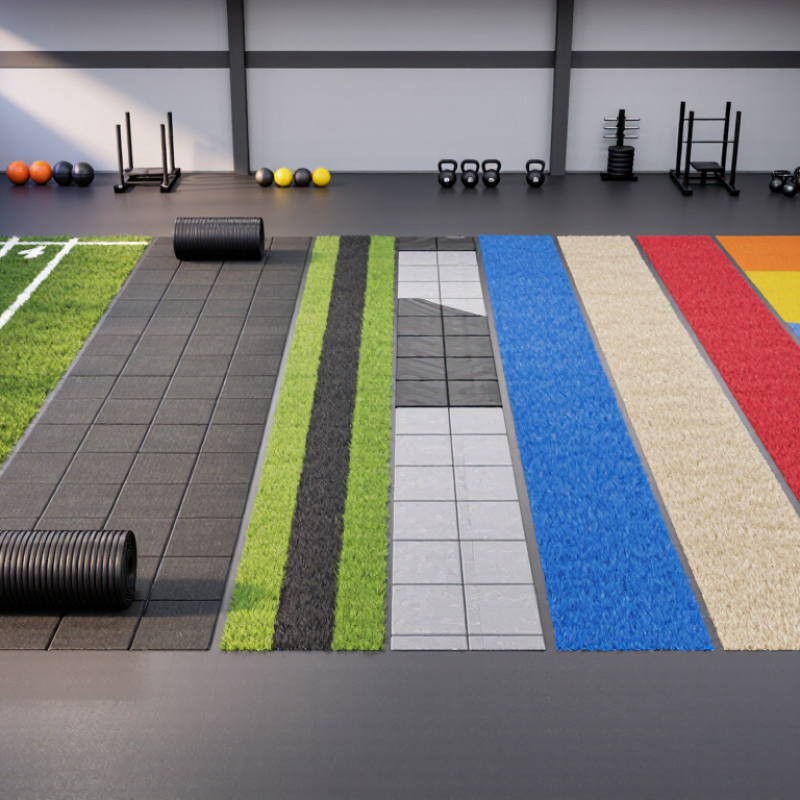
What Are the Top 10 Types of Gym Turf?

Understanding the Main Categories of Gym Turf

What Are the Top 10 Types of Gym Turf?

Gym turf is not one material with ten names. It is a group of surfaces designed for different training demands. The main categories include sprint turf, sled turf, multipurpose turf, strength turf, rubber-backed turf, shock-absorption turf, short-pile turf, long-pile turf, modular tile turf, and outdoor-grade turf. Polypropylene usually offers firm, economical performance. Polyethylene feels softer and more natural underfoot. Nylon handles intense dragging better, but it can cost more.

Use matters more than appearance.

Sprint turf supports quick acceleration and change-of-direction drills. Sled turf needs dense fibers and strong seams. Multipurpose turf suits warm-ups, mobility work, and circuit training. Strength turf protects concrete beneath racks and lifting zones. Shock-absorption systems add comfort, although excessive softness can reduce stability. Short piles clean easily. Long piles may cushion better, but they can trap chalk and dust. Modular tiles simplify replacement. Outdoor-grade turf resists moisture and sunlight.

The Sports & Fitness Industry Association reported that 242.3 million Americans participated in at least one sport, fitness, or leisure activity in 2023. That broad participation increases demand for adaptable training spaces. Grand View Research valued the global artificial turf market at about $4.56 billion in 2023, with continued growth forecast. These figures cover wider markets, not gym turf alone. That limitation matters. A dense surface is not automatically safer. I have seen poorly matched turf slow sleds, collect debris, and expose weak seams. Facility traffic, footwear, cleaning routines, subfloor condition, and installation quality should guide the final choice.
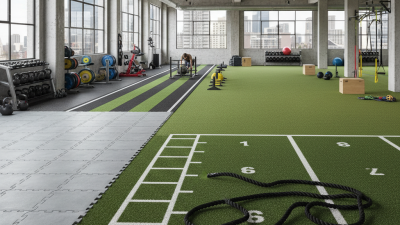
Exploring the Top 10 Types of Gym Turf

Exploring the Top 10 Types of Gym Turf means looking beyond appearance. In real training spaces, surface choice affects traction, noise, cleaning, and athlete confidence. The common options include rolled rubber turf, interlocking rubber tiles, polyethylene turf, polypropylene turf, nylon turf, short-pile turf, long-pile turf, sled turf, shock-absorbing turf, and custom inlaid turf. Each type serves a different training purpose.

Rolled rubber turf creates a continuous floor with fewer seams. Interlocking tiles simplify replacement after heavy wear. Polyethylene fibers feel softer and suit general movement areas. Polypropylene fibers usually cost less but may flatten sooner. Nylon turf handles repeated traffic well, though it can feel firm. Short-pile turf supports quick footwork and easier cleaning. Long-pile turf gives sleds more resistance. Sled turf is built for pushing and pulling drills. Shock-absorbing turf reduces impact during jumping exercises. Custom inlaid turf can mark lanes and training zones clearly.

I have found that installation quality matters as much as turf material. Poorly joined seams can catch shoes and collect dust. A dense backing may improve stability, but it can increase cost. No surface is perfect. Some facilities choose softer turf, then regret slower sled movement. Others prioritize durability and accept a harder feel. Measure traffic patterns, moisture exposure, equipment weight, and cleaning routines before deciding. A small sample tested with actual shoes and sleds often reveals more than a product sheet.

Comparing Gym Turf by Material, Performance, and Use

What Are the Top 10 Types of Gym Turf?

Comparing Gym Turf by Material, Performance, and Use

Gym turf differs by fiber, backing, pile height, and shock control. Nylon turf offers strong abrasion resistance for sled lanes and repeated drills. Polypropylene turf costs less and feels softer, but it may flatten sooner under heavy traffic. Polyethylene turf provides a balanced surface for sprinting, agility work, and general training. Hybrid polyethylene and polypropylene blends combine resilience with a softer touch. PVC turf cleans easily and suits controlled indoor spaces. Rubber-infused turf improves grip and dampens equipment noise. Foam-backed turf adds comfort during floor exercises, although edges need careful installation. Shock-pad turf reduces impact for jumping zones and conditioning circuits. Short-pile turf supports fast footwork and stable sled movement. Long-pile turf feels more cushioned but can slow changes of direction.

Performance depends on more than the material. Dense fibers usually resist matting, while strong seams prevent early separation. A firm base benefits sprinting. A softer base helps repeated landing drills. Moisture resistance matters in humid rooms, yet ventilation remains essential. I have seen attractive turf fail because the adhesive was poorly matched to the subfloor. Small installation errors become loud problems.

There is no universal best type. A sled lane needs low drag and high wear resistance. A functional training area may need cushioning and easy cleaning. Heavy weights require a stable backing and nearby rubber protection. Pile height is often overlooked. Taller fibers can hide debris and increase maintenance time. Specifications also deserve skepticism; laboratory ratings may not reflect daily group classes, dragging, or uneven cleaning. Test a sample under real movement before ordering.

What Are the Top 10 Types of Gym Turf? - Comparing Gym Turf by Material, Performance, and Use

No. Gym Turf Type Primary Material Typical Pile Height Performance Profile Best-Suited Uses Key Advantages Limitations Relative Cost
1 Monofilament Polypropylene Turf Extruded polypropylene fibers with a stable backing 10–20 mm High traction
Firm, consistent surface with moderate shock absorption
Sled pushes, agility drills, strength-training lanes, and general functional fitness Good dimensional stability, clean appearance, and reliable performance under frequent use Less resilient than nylon under extremely heavy abrasion; may require infill or a resilient pad Medium
2 Polyethylene Turf Polyethylene yarns, commonly tufted into a synthetic backing 12–25 mm High comfort
Balanced traction, resilience, and surface softness
Multi-purpose gyms, athletic training areas, sprint lanes, and group fitness spaces Comfortable underfoot, resilient, and suitable for a broad range of training activities Can cost more than basic polypropylene; deep systems may slow sled movement Medium to High
3 Nylon Turf High-strength nylon fibers 10–20 mm Very high durability
Firm response with strong resistance to crushing
Commercial training centers, high-traffic performance facilities, and sled-work zones Excellent abrasion resistance, strong recovery, and long service potential Usually more expensive; can feel firmer and less forgiving without proper underlayment High
4 Hybrid PE/PP Turf Blended polyethylene and polypropylene fibers 12–25 mm Balanced performance
Combines resilience, traction, and moderate comfort
Mixed-use gym floors, school fitness rooms, and functional training zones Versatile performance and a practical balance between durability and price Performance varies by fiber ratio, backing construction, and installation quality Medium to High
5 Short-Pile Performance Turf Usually polypropylene or polyethylene fibers 6–12 mm Fast and firm
Low pile drag with precise foot placement
Speed ladders, change-of-direction drills, footwork, and equipment zones Easy to move across, simple to clean, and compatible with rolling equipment Provides less cushioning and may feel harsh during floor-based exercises Low to Medium
6 Long-Pile Athletic Turf Polyethylene or blended synthetic fibers 25–40 mm High cushioning
More forgiving surface with increased fiber movement
Athletic conditioning, landing drills, indoor field-sport practice, and rehabilitation Comfortable for repeated movement and suitable for sports-style training More difficult for sled work; requires more frequent grooming and debris removal Medium to High
7 Non-Infill Turf Tufted synthetic fibers with a dense backing and no loose granular infill 10–25 mm Predictable and clean
Consistent traction with low loose-particle transfer
Indoor gyms, multipurpose rooms, studios, and facilities requiring easy cleanup Low mess, simple maintenance, and convenient installation in clean indoor environments May offer less weight and fiber support than infilled systems; cushioning depends heavily on the pad Medium
8 Infilled Performance Turf Synthetic fibers supported by sand, rubber, or another approved infill 20–40 mm High stability
Improved fiber support, traction, and impact management
High-intensity athletic training, field-sport simulation, and heavy-use performance centers Stable fibers, enhanced surface feel, and strong performance for demanding movement patterns Requires infill management, specialized cleaning, and careful control of particle migration High
9 Recycled-Content Turf Synthetic yarns or backing that incorporate post-consumer or post-industrial recycled material 10–25 mm Moderate to high durability
Performance depends on yarn design and recycled-content percentage
Fitness centers, schools, community facilities, and projects with sustainability targets Can reduce reliance on virgin raw materials while maintaining practical gym performance Color, texture, and durability may vary between constructions; environmental claims require verification Medium to High
10 Modular Turf Tiles Interlocking synthetic turf modules with rubber, foam, or composite backing 8–25 mm Flexible installation
Performance varies with tile backing and subfloor preparation
Leased spaces, temporary gyms, small training areas, and zones requiring future reconfiguration Easy to replace, relocate, or install in sections; minimizes disruption during repairs Visible seams may develop; movement or moisture beneath tiles can affect long-term performance Medium to High

Note: Actual performance depends on fiber shape, stitch rate, backing, adhesive, subfloor, underlayment, infill, installation quality, and maintenance. Pile-height ranges are typical product categories rather than universal specifications.

Matching Each Turf Type to Different Training Environments

Gym turf should match movement, not merely look athletic. The ten main types are nylon, polyethylene, polypropylene, monofilament, slit-film, hybrid fiber, rubber-backed, shock-pad turf, indoor sprint turf, and outdoor UV-resistant turf. Nylon suits sled pulls and heavy resistance work because its fibers resist compression. Polyethylene feels softer under barefoot drills and supports agility sessions. Polypropylene costs less, but it can flatten sooner under repeated traffic.

Monofilament turf gives a natural grass appearance for acceleration drills. Slit-film turf offers stable footing during lateral movements. Hybrid fiber combines durability with a softer feel. Rubber-backed turf works well in compact indoor studios with concrete subfloors. Shock-pad turf reduces impact during jumps, although excessive cushioning may weaken sprint mechanics. Indoor sprint turf supports short-distance acceleration. Outdoor UV-resistant turf handles sunlight, moisture, and wider temperature changes. Each surface changes traction, noise, cleaning needs, and maintenance costs.

Grand View Research’s Artificial Turf Market Size, Share and Trends Analysis Report projects continued global market growth through 2030, driven partly by sports facilities and training spaces. The 2024 SFIA Topline Participation Report also recorded more than 242 million Americans participating in at least one sport or fitness activity during 2023. That demand increases pressure on shared training floors. A busy performance center may need durable nylon near sled lanes, but softer polyethylene around mobility zones. Keep it practical. I have seen layouts fail when owners choose one turf type for every station. Fiber height, backing, drainage, and subfloor condition deserve equal attention. Recheck the choice after real training begins.

Evaluating Safety, Maintenance, and Installation Requirements

Choosing gym turf requires more than comparing color and pile height. The SFIA 2024 Topline Participation Report recorded 242.1 million Americans joining at least one sport or fitness activity in 2023. That volume increases wear, cleaning demands, and fall exposure. The CDC’s WISQARS data also recorded more than eight million fall-related emergency department visits in 2021. Those figures are not gym-turf specific. They still justify careful flooring decisions.

The main options include short-pile nylon, polyethylene turf, polypropylene turf, hybrid fibers, rubber-infilled turf, non-infilled turf, shock-pad turf, roll-out turf, interlocking turf tiles, and skill-training turf. Short piles usually clean faster. Polyethylene feels softer under repeated movement. Rubber infill can improve traction, but it may scatter across adjacent floors. Non-infilled systems simplify maintenance. Shock pads can reduce impact, although they may complicate installation and replacement. ASTM F1936 testing helps assess athletic-field shock absorption, while ASTM F355 provides impact-testing methods. Neither standard alone proves that a gym installation is safe.

Maintenance should include daily vacuuming, immediate spill removal, and periodic low-moisture extraction. High-use lanes need closer inspection. Look for lifted seams, compressed fibers, exposed fasteners, and uneven transitions. Installation over a clean, level slab reduces trip hazards. Moisture testing matters before adhesive work. I would still place a sample under real sleds and weighted equipment before approving the full floor. Laboratory results can miss practical problems, especially when dust, sweat, and rushed cleaning enter the picture. Safety is never finished.

What Are the Top 10 Types of Gym Turf?

Comparison of typical gym turf systems by safety suitability, maintenance demand, and installation complexity.

How to read the chart: Ratings use a practical 1–5 planning scale. A higher safety score indicates better suitability for indoor training. Higher maintenance and installation scores indicate greater routine care or project complexity.

Actual performance depends on pile height, backing, subfloor condition, seams, drainage, infill, cleaning frequency, and the type of training performed.