How to Choose the Best Artificial Grass for Your Lawn?
Choosing the best Artificial Grass for your lawn can be a daunting task. The market has seen a huge growth, with the artificial grass industry projected to reach $4 billion by 2025. As homeowners seek low-maintenance and eco-friendly solutions, the demand for high-quality artificial grass continues to rise. Industry expert, Dr. Emily Reyes, states, "Selecting the right artificial grass can make or break your outdoor experience."
When evaluating options, consider factors like durability and UV resistance. Many products promise these qualities but deliver inconsistently. A comprehensive comparison can help clarify your choices. Not all artificial grasses are created equal, and some offer features that are unnecessary for your lawn.
As the trend expands, some consumers might overlook important aspects. Quality may vary, affecting longevity and aesthetics. Reflecting on your specific needs leads to a better decision. Each environment is unique, so the right choice should align with your lifestyle and budget. A thoughtful approach will help you enjoy your lawn for years to come.
Factors to Consider When Choosing Artificial Grass for Your Lawn
Choosing the right artificial grass for your lawn involves several important factors. First, consider the material. Most artificial grass is made from polyethylene, polypropylene, or nylon. Polyethylene is soft and durable. It's often a good choice for residential lawns. Polypropylene is cheaper but less durable. It may not withstand heavy foot traffic well.
Next, look at the blade shapes and colors. The best options mimic natural grass. Look for various shades of green. This adds realism to your lawn. However, some synthetic grass styles can appear overly uniform or bright. That can detract from authenticity. Pay attention to the density as well. Thicker grass generally feels better underfoot. But, too much density might lead to heat retention.
In addition, consider the drainage system. Good drainage prevents water pooling during rain. Check if the grass has adequate perforations. Some products fail to drain properly, causing muddy patches. Finally, think about your local climate. In hot areas, heat-resistant grass is essential. If you live in a colder region, choose options that withstand frost. Taking time to reflect on these factors will lead to the best choice for your lawn.
How to Choose the Best Artificial Grass for Your Lawn? - Factors to Consider When Choosing Artificial Grass for Your Lawn
| Factor |
Description |
Importance |
| Pile Height |
The length of the grass fibers. |
Affects the look and feel. |
| Material |
Type of synthetic fibers used (e.g., polyethylene, nylon). |
Determines durability and appearance. |
| UV Resistance |
Ability to withstand sun exposure without fading. |
Important for longevity. |
| Drainage |
How effectively water drains through the grass. |
Prevents pooling of water. |
| Infill Material |
Material used to fill the grass blades for stability and cushioning. |
Enhances comfort and support. |
| Color Variations |
Range of green shades and textures. |
Affects aesthetic appeal. |
| Weight |
The density of the grass per square meter. |
Affects durability and installation. |
| Warranty |
Manufacturer's guarantee on product performance. |
Indicates product reliability. |
Types of Artificial Grass: Understanding Materials and Styles
When considering artificial grass, understanding the types is crucial. There are various materials available. Each type offers unique characteristics. For instance, polyethylene is soft and often used for lawns and play areas. It feels pleasant underfoot and is durable. Conversely, polypropylene tends to be stiffer. This material is suitable for lower-traffic areas.
Different styles are also important to explore. Some options mimic natural grass quite well. Other styles have a more synthetic look and feel. A blend of colors can enhance realism, making the lawn visually appealing. Choosing a style that fits your aesthetic is essential.
However, not every type of artificial grass may suit your needs. Some options may fade over time. Others might require more maintenance than expected. Always evaluate the longevity and upkeep of the material. Consider your intended use carefully. Your lawn should serve its purpose, whether for recreation or decoration. Reflecting on these aspects can lead to a more satisfying choice.
Evaluating Durability and Longevity of Artificial Grass Options
When choosing artificial grass, durability and longevity are key. High-quality options can last 15-25 years with proper care. The materials used greatly impact these factors. For instance, look for UV-resistant fibers to avoid fading. Some reports indicate that synthetic grass can lose 10-15% of its color within the first year without proper UV protection.
Evaluate the wear resistance of the product. Textures that imitate real grass often perform better in high-traffic areas. According to industry studies, 60% of homeowners experience wear in areas where they walk frequently. Selecting grass designed for pet use can also enhance durability. Some types excel in withstanding the wear pets can cause.
Tips: Check for drainage systems in the grass to prevent water pooling. Proper installation can also significantly affect longevity. Always ask for a warranty; it shows the manufacturer's confidence in their product. Remember, the most expensive option isn't always the best. Assess your local climate and usage before making a decision.
Cost Analysis: Budgeting for Your Artificial Grass Installation
When budgeting for artificial grass installation, it’s essential to explore all costs involved. The average cost for artificial grass installation ranges between $5 to $20 per square foot. This price can vary significantly based on the quality of the turf chosen. Higher-quality grass tends to be more durable and visually appealing but can also strain your wallet.
Installation costs could reach up to 70% of the total expense. Hiring professionals usually adds $2 to $5 per square foot. DIY installation can reduce this cost but requires time and effort. Moreover, maintenance savings should factor into your budget. Many homeowners save up to $1,500 annually on water bills with artificial grass. Yet, monthly upkeep is still necessary, including brushing and occasional cleaning.
Initial investment in quality grass can pay off. According to industry reports, quality turf typically lasts 15-25 years. In contrast, poor choices might necessitate replacement sooner, negating any savings. Consider these factors carefully. Analyze the balance between upfront costs and long-term benefits before making a decision. This reflection can lead to smarter financial choices in the long run.
Cost Analysis of Different Types of Artificial Grass
This bar chart illustrates the cost per square foot for different types of artificial grass. Nylon grass typically costs the most, while polypropylene grass is the least expensive option. Understanding the pricing can help in budgeting for your artificial grass installation.
Maintenance Requirements for Different Types of Artificial Grass
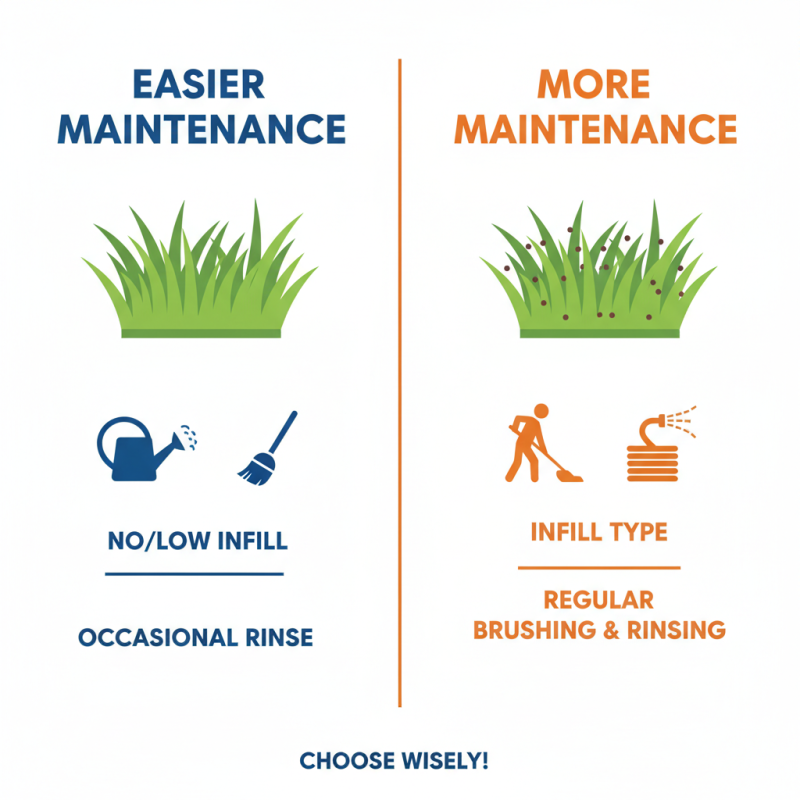
When selecting artificial grass, understanding the maintenance requirements is essential. Some types are easier to care for than others. For instance, an infill type requires regular brushing and occasional rinsing. This keeps the blades upright and removes dust. However, it can be time-consuming.
In contrast, non-infill options need less upkeep. They often resist staining and require only a simple rinse. This makes them appealing for busy homeowners. Yet, they may not provide the same realistic look and feel. Reflecting on this can help you balance aesthetics and ease of care.
Moreover, UV-resistant grass might need a bit more attention over time. While it stands up to sunlight, debris can still accumulate. Regular maintenance is key. If you neglect it, you might face fading or discoloration, which can be frustrating. Choose wisely, considering both your lifestyle and how much time you can realistically dedicate to lawn care.

 +86 19005411400+86 15006803065
 Contact Phone
 Contact Email