
Iquiry Now
Leave Your Message

2026 Best Clear Plastic Tarpaulin for Global Buyers?

The 2026 Best Clear Plastic Tarpaulin for Global Buyers? This question requires more than comparing prices and product photographs. A reliable buying decision begins with real performance details, including film thickness, PVC or PE composition, UV resistance, waterproofing, edge reinforcement, and grommet strength. A tarp may appear perfectly transparent online, yet show haze, brittle corners, or weak eyelets after exposure to sunlight.

W. Edwards Deming, a respected quality expert, said, “Quality comes not from inspection, but from the improvement of the production process.” His principle fits the Clear Plastic Tarpaulin industry well. Buyers should examine how the material is produced, tested, packed, and documented. Ask for measurable specifications, not vague claims. Check whether the stated thickness matches the sample. Review cold-weather flexibility, heat tolerance, tear resistance, and transparency under practical conditions.

Details matter.

For example, a greenhouse cover needs stable light transmission and dependable UV protection. A construction site may require heavier reinforcement and stronger fastening points. A warehouse buyer may prioritize folding, storage size, and repeated use. Global sourcing adds further concerns, such as consistent batches, secure packaging, clear technical sheets, and dependable communication.

No Clear Plastic Tarpaulin is perfect for every application. That assumption can cause expensive mistakes. Even a well-rated product may fail when tension, wind, temperature, or installation methods are ignored. This guide compares practical specifications, supplier reliability, and value for 2026 buyers. Some recommendations may still need local testing. That is an honest limitation, not a weakness.
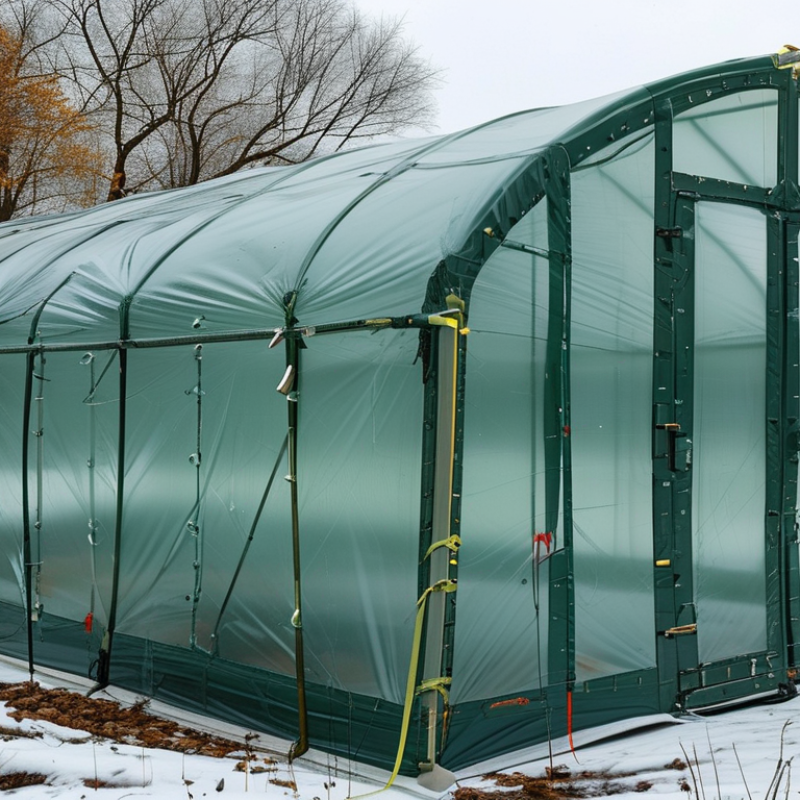
2026 Best Clear Plastic Tarpaulin for Global Buyers?

What Is Clear Plastic Tarpaulin? PVC, PE, TPU, and Common 2026 Uses

For global buyers, clear plastic tarpaulin is a flexible sheet that blocks rain while allowing light through. It is usually made from PVC, PE, or TPU, with woven reinforcement in stronger grades. The clear layer is not always crystal clear. Texture, coating, and humidity can reduce visibility. For buyers, that difference matters.

PVC tarpaulin feels heavier and more stable, making it useful for repeated outdoor covers. It can resist abrasion well, but cold temperatures may make lower-quality PVC less flexible.

PE tarpaulin is lighter and often more economical for temporary shelters, agricultural covers, and storage protection. TPU offers strong flexibility and abrasion resistance, especially where folding happens often. However, its price and supply consistency require careful comparison. Not every clear sheet suits every climate.

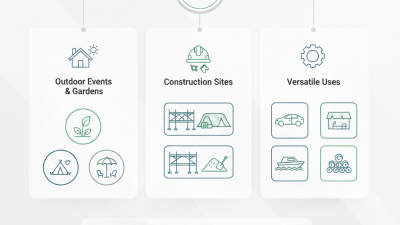
Common 2026 uses include greenhouse sidewalls, construction enclosures, market canopies, truck covers, and temporary work partitions. Before ordering, check thickness, fabric density, tear strength, light transmission, welding quality, and temperature range.

Ask for sample testing under sunlight, rain, and repeated folding. A small sample can reveal odor, cloudy areas, weak seams, or misleading measurements. I have found that seam quality often matters more than impressive film thickness. Still, this is not universal. Site exposure and handling habits can change the result.

Reliable suppliers should provide test data, tolerances, care instructions, and clear production records. Buyers should verify those details instead of trusting photographs alone.

How Clear Tarps Are Classified by 0.10–0.30 mm Thickness and 300–650 g/m² GSM

For global buyers, clear tarpaulin quality begins with thickness and GSM, not appearance alone. A 0.10 mm tarp usually falls near 300–350 g/m². It suits short-term covers, indoor partitions, and light rain protection. At 0.15–0.20 mm, practical weights often reach 400–550 g/m². These sheets offer better tear resistance for market stalls, greenhouse sides, and equipment covers. The 0.25–0.30 mm range can approach 600–650 g/m². It feels noticeably stronger under hand pressure and handles repeated outdoor use better.

Thickness is only one measurement. ISO 2286-2 defines methods for measuring coated-fabric mass per unit area, while ASTM D751 covers key tests for coated fabrics, including tensile and tear performance. Buyers should request both results. Industry market analyses published by Grand View Research identify construction and agriculture as major tarpaulin demand sectors, where weather exposure makes coating quality important. In practice, clear PVC film may lose flexibility in cold conditions or become brittle under strong ultraviolet light. A higher GSM does not automatically solve that problem. That shortcut is imperfect.

For 2026 purchasing, ask for a production sample, measured GSM, thickness tolerance, eyelet spacing, and UV test data. Check the sheet beside daylight. A clear tarp should transmit useful light without looking oily, cloudy, or uneven. Supplier test sheets can be incomplete; independent verification is wiser for large orders.

2026 Clear Plastic Tarpaulin Classification by Thickness and GSM

This chart groups clear plastic tarpaulins across the stated 0.10–0.30 mm thickness and 300–650 g/m² GSM ranges. Bars show the midpoint GSM for each classification band, while the line shows the midpoint thickness. The midpoints are calculated from the displayed ranges; thickness and GSM are related specifications but are not a universal one-to-one conversion.

How ISO 1421 Tensile Strength and ASTM D751 Tests Compare Tarpaulin Quality

2026 Best Clear Plastic Tarpaulin for Global Buyers?

Clear plastic tarpaulin quality depends on test conditions, not appearance alone. ISO 1421:2016 measures tensile strength and elongation in coated fabrics. It commonly uses strip or grab specimens. ASTM D751 evaluates coated fabric through specified breaking-strength and seam-related procedures. The methods are related, but their results are not automatically interchangeable.

A laboratory report should state specimen width, gripping method, conditioning temperature, pulling speed, and failure location. These details matter. A clear tarp may show strong film performance but fail beside the welded seam. ISO 1421 results often report force with elongation percentage. ASTM D751 results may use different specimen geometry and reporting practices. Comparing only the highest number can mislead buyers.

Professional procurement teams should request independent reports referencing ISO 1421 and ASTM D751, with at least five specimens per direction when practical. That small sample reveals uneven coating, weak yarns, and inconsistent welding. ASTM D751 guidance also helps examine breaking strength, tear behavior, and adhesion in coated fabrics. The British Standards Institution and ASTM technical publications both stress controlled conditioning before testing. Field experience adds another warning: clear PVC-coated fabric can stiffen in cold storage and soften under heat. Test data is essential, but one report is never the whole product.

2026 Best Clear Plastic Tarpaulin for Global Buyers? – How ISO 1421 Tensile Strength and ASTM D751 Tests Compare Tarpaulin Quality

Evaluation Dimension ISO 1421 Reference ASTM D751 Reference Typical Clear PVC Tarpaulin Data Buyer Quality Interpretation
Test purpose Determines tensile force and elongation of coated fabrics using a defined tensile-testing procedure. Covers several coated-fabric tests, including breaking strength and elongation; the exact procedure must be stated in the test report. Use both standards to evaluate the strength of the polyester base cloth and the coated composite. A test standard alone does not define product quality; the method, specimen direction and reported result are equally important.
Main reported result Maximum tensile force at break and elongation at break. Breaking strength and elongation, commonly supplemented by tear strength, coating adhesion and other applicable properties. Tensile strength: approximately 1,000–3,000 N per 50 mm, depending on fabric weight and construction. Higher tensile force generally supports better resistance to pulling during installation, transport and wind exposure.
Test configuration Includes strip and grab approaches. The selected method should be identified because specimen geometry affects results. May use different coated-fabric procedures and fixtures. The laboratory should identify the applicable ASTM D751 procedure. For purchasing comparisons, request the same specimen width, jaw type, test speed and conditioning process for every sample. Results from different methods should not be ranked directly unless the test conditions are equivalent.
Machine direction Report warp and weft directions separately where the fabric construction is directional. Report results by direction when required by the product specification or purchase contract. Typical difference between warp and weft tensile values: about 5%–25%, depending on yarn density and weaving design. A balanced warp/weft result is preferable for covers exposed to changing wind direction and repeated handling.
Elongation at break Measured together with tensile force and expressed as a percentage of the original gauge length. Measured according to the selected ASTM D751 breaking-strength procedure. Common finished-fabric range: approximately 15%–35% for polyester-reinforced PVC tarpaulin. Moderate elongation can absorb installation stress; excessive stretch may cause sagging or dimensional instability.
Fabric mass Not a direct requirement of ISO 1421, but mass should be reported separately for product comparison. Not a direct breaking-strength result; it is normally measured using a separate mass-per-unit-area procedure. Light: 300–450 g/m²; standard: 500–650 g/m²; heavy: 700–950 g/m². Higher mass often indicates greater coating and reinforcement, but does not guarantee superior tensile strength.
Finished thickness Thickness is not determined by the tensile test and should be specified separately. Thickness is a separate physical property and should not be inferred from breaking-strength results. Approximately 0.30–0.90 mm for common clear PVC tarpaulin constructions. Thickness affects handling, puncture resistance, folding performance and expected service life.
Tear strength Tear resistance is not the primary output of ISO 1421; use a suitable tear test when required. ASTM D751 includes coated-fabric tear procedures that may be specified separately from breaking strength. Representative tear-strength range: approximately 100–300 N, depending on construction and test method. Important for eyelets, corners and areas where a small cut could develop into a larger failure.
Coating adhesion Not part of the tensile-strength result; adhesion requires a separate coated-fabric evaluation. ASTM D751 can be used for applicable coating-adhesion evaluation when this property is included in the specification. Typical purchasing target: approximately 20–60 N per 25 mm, subject to construction and test conditions. Strong adhesion reduces delamination, coating lift and premature leakage after folding or abrasion.
Light transmission Not covered by the tensile test. Not covered by the breaking-strength test. Clear PVC tarpaulin commonly provides approximately 50%–90% visible-light transmission, depending on thickness, gloss, reinforcement and additives. Higher transmission is useful for daylight enclosures, temporary partitions and agricultural covers; verify with a dedicated optical test.
Water resistance Not determined by ISO 1421 tensile testing. Not determined by ASTM D751 tensile testing; a hydrostatic or leakage procedure must be specified separately. A properly welded PVC-coated fabric should provide a continuous waterproof surface; seam performance must be tested separately. A high tensile result cannot compensate for pinholes, poor welding, damaged coating or leaking seams.
Temperature suitability Temperature resistance is not established by ISO 1421 unless tensile testing is conducted after specified conditioning. Low-temperature flexibility can be evaluated through a separate applicable procedure under ASTM D751. Many flexible PVC tarpaulins are specified for approximately −20°C to +70°C service, but the actual range depends on formulation. Global buyers should request low-temperature flexing and heat-aging data for cold climates, transport and outdoor storage.
Recommended purchasing evidence Request the edition, test method, specimen direction, conditioning, peak force and elongation at break. Request the exact ASTM D751 procedure, unit system, fixture type and any additional tests performed. For a robust heavy-duty clear tarpaulin, a buyer may compare products around 700–950 g/m², 0.60–0.90 mm thickness and 2,000–3,000 N/50 mm tensile strength. Choose the product with consistent independent test data, suitable tear and adhesion results, reliable seams and the required optical performance.
Data note: The performance ranges shown are representative purchasing benchmarks for polyester-reinforced clear PVC tarpaulin and are not universal pass/fail limits. Actual results vary with yarn count, weave, PVC formulation, coating thickness, reinforcement, conditioning and laboratory procedure. ISO 1421 and ASTM D751 results should be compared only when the test conditions and reporting units are equivalent.

How UV Resistance, Temperature Ratings, and EN 13501-1 Fire Classes Affect Selection

For global buyers, clear plastic tarpaulin selection should begin with exposure, not appearance. A sheet may look crystal clear in a showroom, then haze after months of sunlight. UV resistance depends on stabilizers, thickness, color, and manufacturing quality. Ask for accelerated weathering data and a stated service life. Do not rely on “UV treated” alone. That phrase is too vague. Coastal and high-altitude areas can expose weak formulations faster.

Tips: Match the temperature rating to the coldest and hottest conditions during storage and use. A tarp rated for -20°C may become brittle below that point, while heat can soften it, stretch seams, or increase shrinkage. Check both continuous and short-term ratings. Test a sample outdoors if the project matters. I have seen a film pass a simple hand test but fail around eyelets after repeated folding. Small details matter.

EN 13501-1 fire classes help compare reaction-to-fire performance, but they do not make a tarp fireproof. Request the exact classification, test report, mounting method, and substrate details. Results can change when the material is tensioned, laminated, or installed beside insulation. A higher class is useful, yet it may not suit every application. Confirm local project requirements with a qualified fire-safety professional. Specs are helpful. Context decides.

How Global Buyers Evaluate Pricing, Certifications, Packaging, and Import Compliance

2026 Best Clear Plastic Tarpaulin for Global Buyers?

Global buyers now compare more than the quoted price. A clear tarpaulin may cost less, yet weak packaging can create damage, claims, and port delays. I usually request a full cost sheet covering fabric weight, thickness, edge reinforcement, eyelet spacing, carton size, and delivery terms. Price per square meter is useful. It is not enough.

The World Bank’s 2023 Logistics Performance Index collected feedback from 4,090 logistics professionals across 139 countries. Their findings reinforce one practical lesson: shipment visibility and handling reliability affect purchasing decisions. Ask for roll dimensions, gross weight, pallet configuration, moisture protection, and barcode information before placing a large order. Small details matter. A transparent film can hide creases, pinholes, or uneven coating, so buyers should inspect samples under strong light and record test results.

Certification checks should match the destination market and product use. ISO 9001 supports process control, but it does not certify every tarpaulin. Request current test reports for tensile strength, tear resistance, UV exposure, and restricted substances when applicable. Check the HS classification with a customs specialist, because classification and duty treatment vary by country. The OECD Trade Facilitation Indicators 2022 estimated that comprehensive reforms could reduce trade costs by 12.5% to 17.5%. Clear documents help capture that advantage. I would still avoid trusting a certificate without checking its issuer, scope, test method, and date. That mistake is common, and expensive.